Public Safety & Courts
Five Dead in Scioto River Drowning Tragedy in Delaware County
By Staff · July 24, 2026
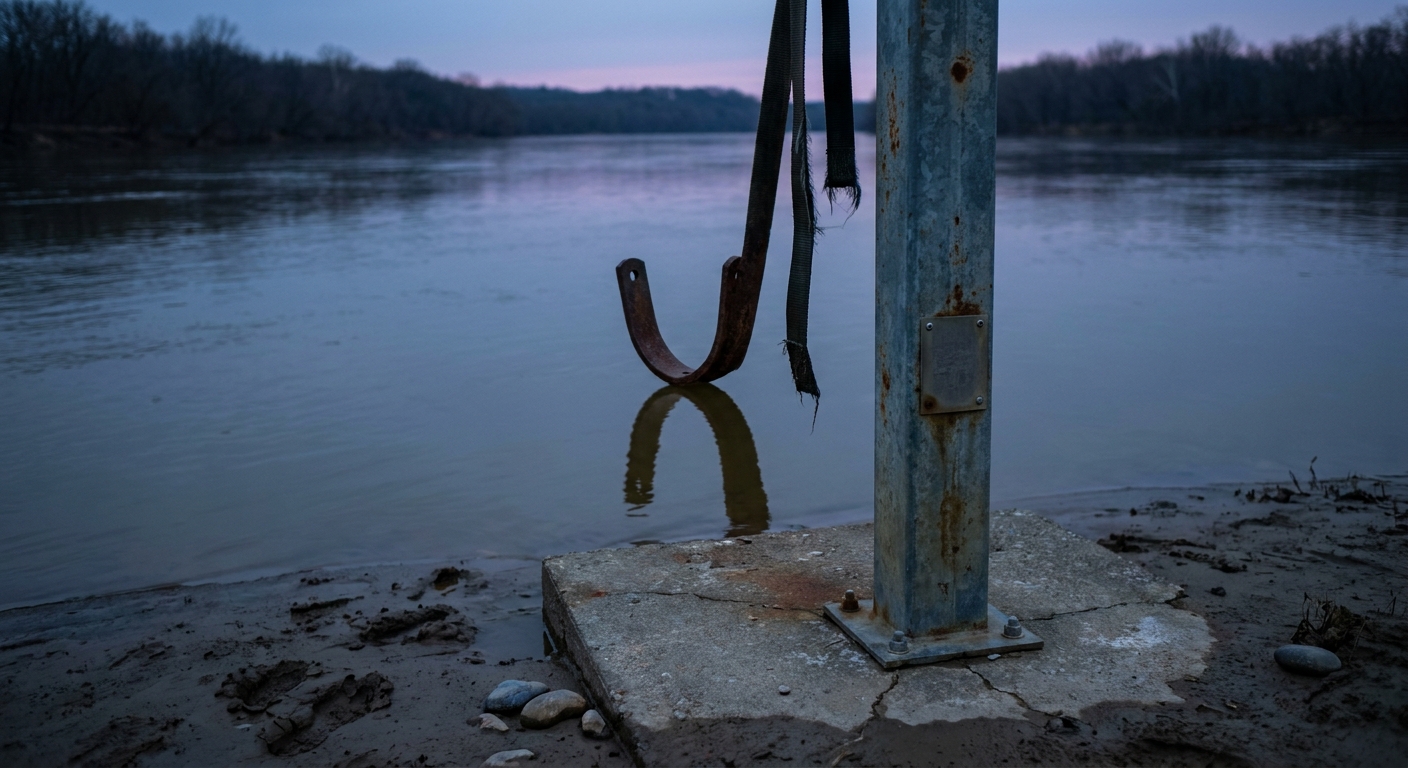
Five people died trying to save a struggling swimmer in the Scioto River on July 19, a catastrophe on the waterway Dublin has made central to its riverfront identity and development. The deaths occurred near O'Shaughnessy Reservoir Park in Powell, along the river near Riverside Drive and State Route 257 in Delaware County. The park is owned and managed by the City of Columbus, not Dublin or Powell.
Delaware County Sheriff Jeffrey C. Balzer said the victims were part of a group that had gathered along the river that evening.
"My understanding is that a group of people came to the river sometime last evening to enjoy themselves on a summer night, including some fishing. And at some point, we believe one of the folks got in the river to go swimming. And that's when the tragedy started to occur," Balzer said.
One person entered the water to swim and began struggling, prompting others in the group to attempt a rescue. All five people who entered the water drowned.
A motorist called 911 just after 9 p.m. on July 19 after seeing a distressed child running along State Route 257. The child told the driver that the child's family was in the river. Two children under 10 years old had remained on shore and survived. They lost their parents and were later placed in the care of Delaware County Job and Family Services.
Two women were pulled from the river on Sunday evening and later pronounced dead at local hospitals. The bodies of three men were recovered Monday, July 20.
All five victims have been identified, including one Salvadoran national and two married couples from Honduras: Miguel Ángel Guerra and Carmen Idalia Lara Ferrera, and José Mario Pineda and Marina Suyapa Regalado Miranda. Honduran consular officials confirmed that four of the five adults who drowned were Honduran citizens and said they are working with U.S. authorities to repatriate the bodies. The Delaware County Sheriff's Office is investigating.
The drowning prompted a massive multi-agency response that underscored the operational challenge of protecting a river corridor divided among numerous governments. Fire departments responding included Concord, Liberty, Berlin, Jerome, Scioto and Washington townships. Police agencies included the Delaware, Sunbury, Powell, Columbus and Shawnee Hills departments, along with Delaware County EMS and the Delaware County Emergency Management Agency. The Columbus Division of Police dive team assisted with the search and recovery, while the Ohio Department of Natural Resources provided on-water search support and a Columbus police helicopter searched the riverbanks.
Dublin's emergency operations plan makes the city responsible for the initial response to emergencies within its limits; incidents that cross jurisdictions in Delaware, Union or Franklin County are coordinated through the relevant county emergency management agency. Washington Township's Dublin Fire Department, which serves Dublin and portions of Franklin, Delaware and Union counties, has land and water rescue capabilities. The July 19 response — at a Columbus-owned park in Powell, under investigation by Delaware County and involving units from at least six townships and five municipalities — showed the complexity of responding on a waterway that no single government controls.
The Scioto runs through Dublin and Powell, past Columbus-owned parks and across jurisdictions in Delaware and Franklin counties, meaning no single entity can unilaterally install safety infrastructure, post warning signs or enforce water-safety rules throughout the corridor.
Those concerns are especially relevant in Dublin, which has spent more than 15 years transforming its stretch of the Scioto from a natural boundary into a branded recreational, residential and commercial amenity. Dublin City Council formally approved the Bridge Street District vision for an urban, walkable community along the river in 2010. Construction on the first phase of Bridge Park began in summer 2015, and the first residents and commercial tenants moved in during 2016. Bridge Park is now branded as one of central Ohio's premier dining and entertainment districts along the Scioto. The Dublin Link pedestrian bridge opened in March 2020, connecting Bridge Park with Historic Dublin.
That riverfront expansion is continuing. On July 9, 2026, Dublin's planning and zoning commission gave preliminary approval to Bridge North, a roughly 7-acre northern expansion of Bridge Park along the Scioto that would add 75,000 square feet of office space, 60,000 square feet of retail, 296 housing units, structured parking and a 150-room hotel.
Dublin has formal canoe and kayak access points at Amberleigh Community Park, Dublin Spring Park, Scioto Park and near the Emerald Parkway bridge. The city's park code allows swimming, wading, boating and ice skating only in areas or at times designated by appropriate signage. Its blueways master plan calls for improved river and off-river signs and maps, as well as safety promotion through educational programming and signage.
Balzer advised people gathering near bodies of water to have safety devices such as life vests available and to use caution before entering the water themselves during a rescue attempt.
Yet none of the jurisdictions that share the Scioto corridor — Columbus, which owns the park where five people drowned; Delaware County, which is investigating; or Dublin, which has spent more than 15 years branding and developing its stretch of the same river — has publicly demonstrated a coordinated regional approach to river-safety infrastructure, emergency response or public education.
The deaths occurred outside Dublin, but they raise direct questions for a city that markets the Scioto as a recreational asset and is advancing plans to place hundreds more homes, a hotel and tens of thousands of square feet of commercial space along its banks. For residents who live along the corridor and view the Scioto as part of the community's identity, the July 19 tragedy leaves an urgent question: Has riverfront development across multiple jurisdictions outpaced the region's ability to protect the people drawn to the water?