Public Safety & Courts
Dublin police expand Drone as First Responder program as department posts new public-safety tech details and 2026 activity data
Four city-owned drones now launch from rooftops at City Hall and three other sites, putting an eye over nearly any Dublin address within 90 seconds of a 911 call.
By Staff · September 24, 2026
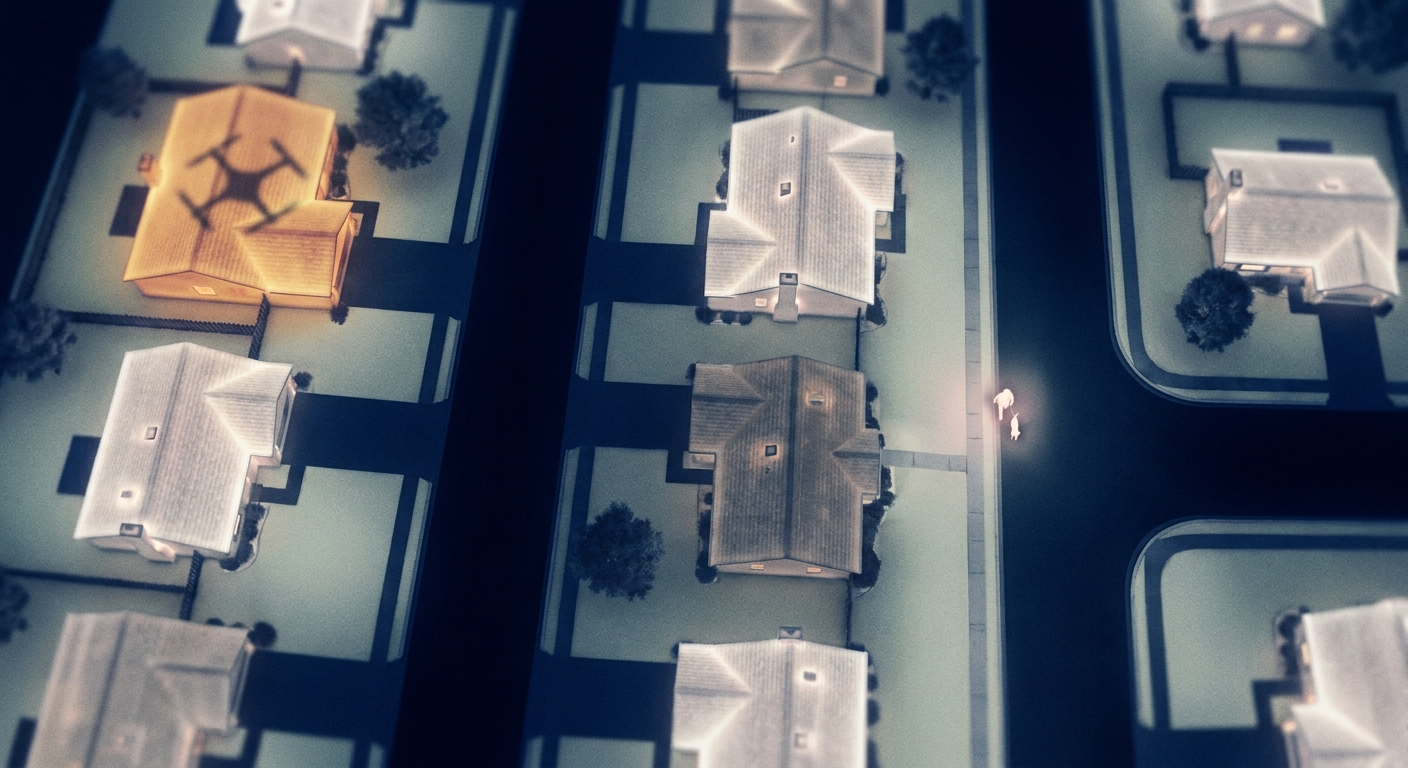
A drone now lifts off from the roof of Scioto High School when a Dublin resident dials 911 — one of four city-owned aircraft that can be overhead of nearly any address in town in 90 seconds, before a patrol car reaches the curb.
The Dublin Police Department's Drone as First Responder program launches the unmanned aircraft from rooftop docking stations to answer police and 911 calls, streaming live aerial video to responders before ground units arrive.
The city operates four drones from four stations — City Hall, Scioto High School, Grizzell Middle School, and the Washington Township Fire Department Administration Building — each with roughly a 3-mile flight radius that the city says covers the entire city.
The city published its Drone as First Responder resource page and the department's January–March 2026 activity report in September, giving residents their first concrete look at where the drones fly and what they are answering.
What the drones answer
Sgt. Andrew Clark of the Dublin Police Department said the drones answer "alarm calls, any type of 911 or emergency situation... a missing person, fleeing suspects, traffic accidents."
The aircraft are DJI Matrice 30T units equipped with thermal imaging, 60x optical zoom, and 200x digital zoom, with a top flight speed of about 45 mph and roughly 20–25 minutes of battery life on target before auto-return.
Deputy Chief Greg Lattanzi said the drones "have many of the same features as helicopters, including cameras, night vision, and thermal imaging, but with flight-time limitations." He said a Dublin drone can be overhead of any location in the city in 90 seconds or less, giving officers, dispatchers, or Washington Township firefighters a chance to overview a scene before responders arrive.
The system runs through a web-based interface available on desktop, phone, or tablet, with Paladin as the city's drone program partner, and operates with flight authorization across Franklin, Union, Delaware, and Madison counties.
The rules over your house
The program is governed by Dublin Police Department Policy and Procedure 303.25, approved by Chief Justin Páez and last updated July 31, 2026. The policy states that the Chief of Police appoints a program coordinator responsible for managing the DFR program, and that missions are conducted under an FAA-approved Certificate of Authorization.
The policy is explicit about what the drones cannot do: they "shall not be used for: Random or unauthorized surveillance; Any use outside of emergency response or incident documentation; Continuous flight over people or vehicles."
It also requires that video or data involving a reasonable expectation of privacy be reviewed by the Chief of Police or their designee to determine whether it is eligible for release, and that flight logs may be provided upon request. Incidents involving a City-owned drone causing serious bodily injury, death, or property damage over $500 must be reported immediately to the UAS Program Coordinator and the Chief of Police through the chain of command.
What the streets show
The January–March 2026 activity report, covering January 1 through March 31, shows what was happening on the streets beneath those drones.
Dublin Police received 13,791 total calls for service in the quarter, 3,953 of them citizen-initiated. Average response time for citizen-initiated calls was 6 minutes — a drone can be overhead in a fraction of that time — and the average time to handle a citizen-initiated call was 56 minutes.
Dublin reported 168 traffic crashes, about 1.87 per day, a 5.0% increase over the same period in 2025. The report shows increases in serious-injury and OVI-related crashes year over year, and identifies failure to yield (20.2%) and following too closely (19.6%) as the leading contributing factors. The busiest hour for crashes was 2–3 p.m., with eight alcohol-related crashes and 130 citations issued to at-fault drivers in the quarter.
OVI-related arrests rose 44.4% year over year, from 45 in 2025 to 65 in 2026. Part I violent crimes were down slightly, from 9 in 2025 to 8 in 2026, an 11.1% decrease.
For residents who want to know what flies over their street, the policy requires flight logs to be provided upon request, and the city processes public-records requests through JustFOIA. Dublin Police's non-emergency line is 614.889.1112.