Local News
Dublin's Drinking Water and the Scioto: Who's Watching for Fracking Contamination?
City officials and Columbus' water division did not respond to questions about whether anyone tests the Scioto for fracking-related contaminants like methane or brine salts.
By Staff · September 4, 2026
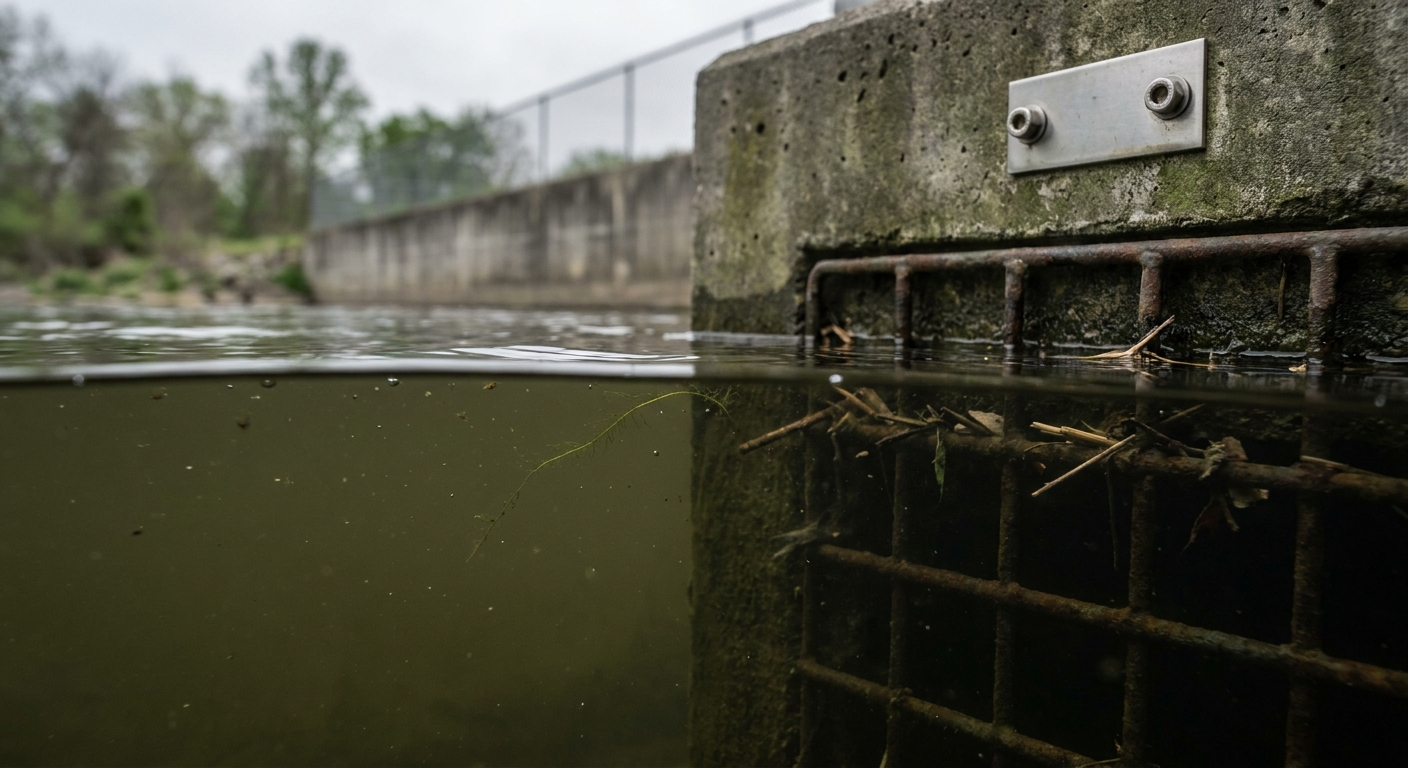
Dublin maintains more than 1,100 acres of parkland, and the Scioto River frames the Bridge Park development anchoring the city's tech corridor, and supplies — through Columbus' treatment system — the tap water Dublin residents drink. But when asked what the city is doing to monitor that river for contamination from upstream fracking activity, Dublin's top officials had nothing to say.
City Manager Megan O'Callaghan and Streets and Utilities contact Gary David Browning did not respond to questions about whether Dublin has sought or conducted any specialized testing for fracking-related contaminants beyond what Columbus routinely runs. The Columbus Division of Water likewise did not answer questions about whether its source-water monitoring includes methane, brine salts or other fracking-specific parameters.
What the reporting found: Dublin does not appear to conduct active monitoring for fracking-related contaminants and may be relying entirely on Columbus' routine compliance testing — testing that does not target fracking impacts.
What Columbus Tests — and What It Doesn't
Dublin's public water comes through contracts with Columbus, whose system draws from the Scioto River, Hoover Reservoir and groundwater in the Scioto River Valley. Dublin maintains formal water-quality reporting, including a 2024 Water Quality Report, but does not operate the treatment plant serving its customers.
Columbus' 2025 Consumer Confidence Report stated that treated tap water met all Safe Drinking Water Act standards, listing trace detections of fluoride, barium, nitrate and chlorine — all below violation levels. The Columbus Division of Water has tested source water for PFAS since 2019 through its Water Quality Assurance Lab, detecting some compounds at very low levels near detection limits.
Methane, however, is not highlighted as a routine contaminant in Columbus consumer-confidence materials or Ohio EPA drinking-water and Scioto surface-water monitoring materials. Testing for methane, hydrocarbons or dissolved-gas indicators associated with fracking would generally require a specialized groundwater or source-water study rather than the routine compliance panels reported for treated municipal water.
Ohio shale-development guidance recommends collecting raw-water samples before treatment through an Ohio EPA- or NELAP-certified lab, analyzing parameters that can indicate oil-and-gas impacts — dissolved methane and brine-indicating ions such as chloride, sodium, barium and bromide. Nothing in the public record shows Dublin or Columbus has applied that guidance to the Scioto corridor.
A U.S. Geological Survey station on the Scioto at Columbus continuously reports streamflow and river stage but is not showing active water-quality parameter reporting for 2026.
Injection Wells in the Watershed
Ohio had 232 active Class II brine injection wells statewide on ODNR's most recent second-quarter 2025 map. Columbus Community Bill of Rights, an advocacy group, reports 13 active Class II frack-waste injection wells in the Columbus/Scioto River watershed area, citing ODNR well data, although current ODNR materials do not directly confirm that watershed-specific count.
ODNR's publicly available county data does not show meaningful new drilling-permit activity in Delaware County during 2025 or 2026. The county page lists one total permit and one approved permit for the current year, a figure that appears to reflect historical cumulative drilling rather than new activity.
The ODNR Division of Oil & Gas Resources Management did not respond to questions about the number of operating injection wells upstream of Dublin in the Scioto watershed, their distances from the city, or containment and monitoring requirements intended to prevent surface-water contamination in the Scioto basin.
The Marietta Warning
The stakes of inaction have come into sharper focus elsewhere in the state. This summer, fracking wastewater injected into disposal wells in the Marietta and Washington County area was reported to be moving underground and surfacing, threatening nearby oil and gas wells and drinking-water aquifers serving roughly 32,000 residents. Four Washington County injection-well owners voluntarily halted operations at ODNR's request amid evidence that stored wastewater could be migrating toward local drinking-water supplies.
Up to 840,000 gallons of fracking wastewater a day had been permitted for injection within two miles of Marietta's aquifer. The episode raised concerns about drinking-water supplies and property values in communities reliant on potentially affected sources.
State Oversight and Its Limits
Ohio EPA has authority to inspect pollution conditions and injection wells, collect samples, require reporting and seek court enforcement for water-pollution and wastewater violations. Its district offices monitor compliance through sampling, facility-data reviews, enforcement actions and permits covering wastewater plants, factories and stormwater runoff, and the agency develops watershed plans and samples streams, lakes, wetlands and aquatic life.
Neither the Ohio EPA Central District Office nor the Ohio EPA Division of Drinking and Ground Waters responded to questions about specific water-quality sampling or watershed assessments conducted in the Scioto corridor upstream of Dublin, or about documented oil-and-gas-related violations, contamination incidents or enforcement actions in that watershed.
State rules permit the ODNR chief to suspend a Class II injection well causing, or likely to cause, contamination of land, surface water or subsurface water. But advocates have criticized Ohio's injection-well program as weak, arguing that ODNR cannot directly impose penalties and instead must refer penalty matters to the Attorney General — a process they contend delays enforcement and produces few meaningful consequences.
Dublin's Legal and Policy Options
Dublin's published ordinances and resolutions do not include a local fracking ban or any fracking-specific protective measure. Ohio law substantially limits what a city could enact: R.C. Chapter 1509 generally preempts local rules governing the permitting, location, spacing or technical operation of oil and gas wells, including municipal permit systems directed at fracking. In State ex rel. Morrison v. Beck Energy Corp., the Ohio Supreme Court determined that Munroe Falls ordinances conflicted with the state's exclusive authority under R.C. 1509.02, which gives ODNR sole and exclusive authority over oil and gas well regulation, and held that municipalities may not discriminate against, unfairly impede or obstruct oil and gas activities the state has permitted.
Dublin's environmental framework does include its Sustainability Plan, adopted in October 2025, along with stormwater and environmental ordinances and Community Plan policies promoting sustainable building, erosion control, native plantings and invasive-species restrictions. But published council agendas, ordinances and sustainability-planning materials show no formal deliberation on fracking risks to the Scioto or the region's drinking-water sources.
O'Callaghan did not respond to questions about whether city officials have assessed fracking risks to the Scioto or drinking-water sources, whether council has discussed a response within the limits of state preemption, why the matter has not appeared in the sustainability agenda, or whether the city will ask Columbus to conduct specialized fracking-contaminant testing, commission an independent source-water assessment, or place fracking risks on a council agenda in the coming year.
What's at Stake
The river's condition carries direct economic weight. Recent estimates place Dublin home values between roughly $552,310 and $635,000, reflecting the city's standing as a high-amenity community. Bridge Park, a master-planned mixed-use district with about 2 million square feet of development at full build-out — office, retail, housing, hotels and parking — is anchored by the Scioto corridor. Its office space was reported about 95 percent occupied, with gross asking rents near $35 per square foot compared with about $22 elsewhere in Dublin, a premium tied in part to river views and walkability.
Dublin's 64 developed parks include river frontage and more than 154 miles of shared-use paths linking residents to regional parks and natural areas along the Scioto. Those amenities are part of the quality of life that draws residents and employers to the city — and part of what's unprotected without targeted monitoring.
What Residents Can Do
Residents can press the city to publish an annual source-water protection plan addressing fracking risks, ask the Columbus Division of Water to add methane and brine-indicator testing to Scioto River monitoring, and urge City Council to consider options not foreclosed by state preemption — emergency-response planning, transparency resolutions, or formal requests to state agencies for watershed-specific data.
Without Dublin-specific monitoring for fracking-related contaminants, a council policy discussion, or public reporting focused on those risks, residents remain dependent on state enforcement by ODNR and Ohio EPA — the same agencies now facing renewed scrutiny after the Marietta injection-well failures.