Arts & Culture
Abbey Theater of Dublin Unveils Full 2026 Season with Youth Collaborations and World Premieres
By Staff · July 25, 2026
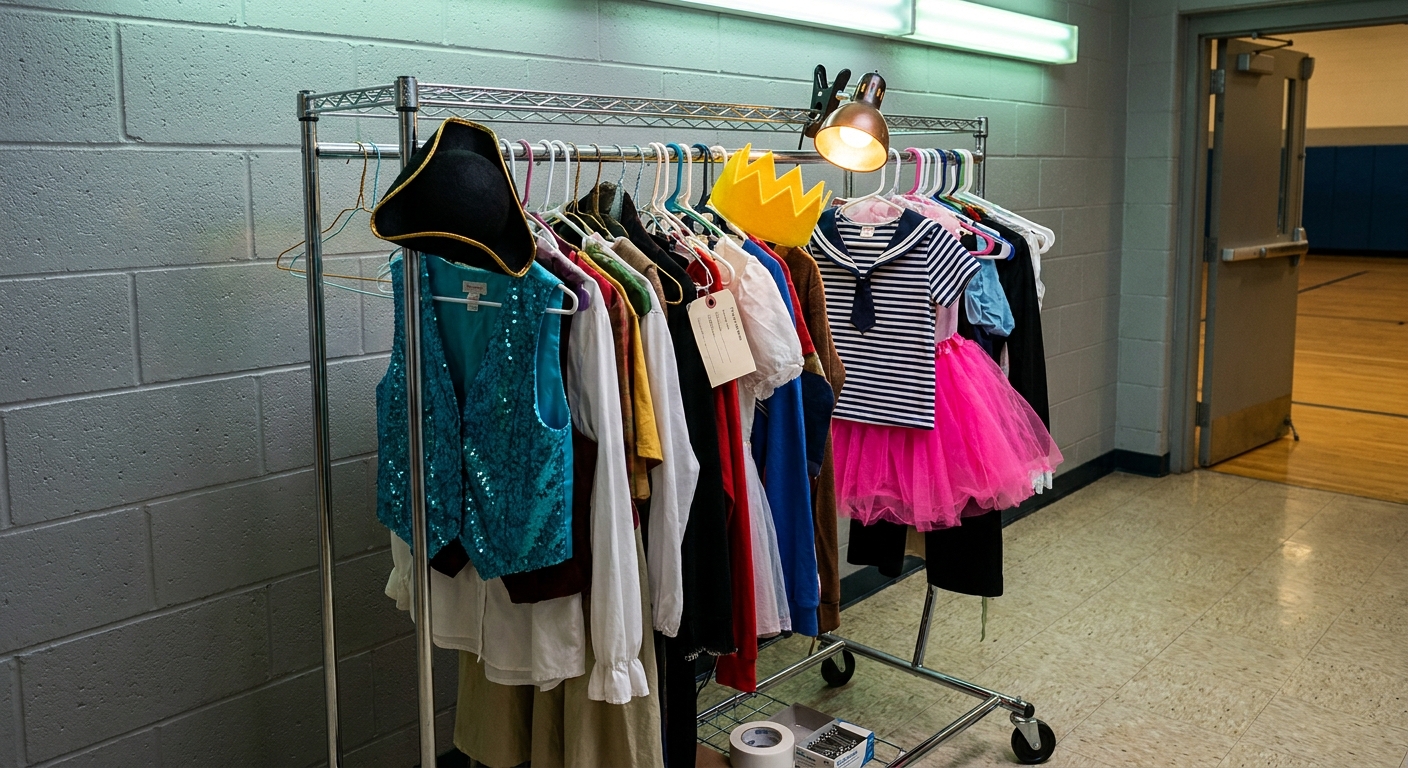
Dublin is putting 11 productions on the Abbey Theater stage from January through November 2026, pairing world and regional premieres with Dublin City Schools collaborations and work with Original Productions Theatre. For families facing rising housing costs, the announcement is more than an arts calendar: It is a test of whether the city's cultural investment gives current residents a place in Dublin's civic life—or chiefly adds polish to a city becoming harder to afford.
The 200-seat Abbey Theater, located inside the Dublin Community Recreation Center at 5600 Post Road, aims to engage residents of all ages in Dublin and across the greater Columbus region. Its 2026 lineup spans Theater for Young Audiences shows performed by children, pre-professional productions for high-school-aged performers, and community collaborations with Dublin City Schools—an emphasis that puts young people onstage, not just in the audience.
The season opens with A Comedy of Errors, presented Jan. 9–18 in collaboration with Dublin Coffman High School. It continues with SIX: The Musical: Teen Edition from Feb. 6–15, Olympus: The Greek Rock Musical! from March 6–8, The SpongeBob Musical: Theater for Young Audiences Edition from March 20–22, The Pub's Got No Beer from April 9–19, 1776 from May 29–31 and June 5–7, 35mm: A Musical Exhibition from July 10–12, Newsies JR from July 16–19, The Lightning Thief from Aug. 7–16, The Velocity of Autumn from Sept. 25–27 and Oct. 1–4, and Finding Nemo JR and Finding Nemo KIDS from Nov. 19–22.
The season's world premiere, Irish playwright Sean Cooney's The Pub's Got No Beer, appears under the Abbey's "Only in Dublin" programming category. It centers on a Cork City pub that runs out of Guinness as President John F. Kennedy returns to Ireland.
The Abbey has also built pathways through local theater and higher-education partnerships. Original Productions Theatre, Inc., maintains an ongoing partnership with the venue; the two organizations co-produced the professional premiere of Bobby and the Chimps in 2025 and the world premiere of go to coda in 2020 as part of the theater's Virtual Theatre Project. The Otterbein Playwrights Collective, a summer program featuring Otterbein student-written one-act plays performed by Dublin-area teen actors, held performances at the Abbey in June and July 2023.
Those collaborations give students exposure to staged and professional theater without necessarily requiring their families to buy tickets for the children to participate. For audience members, however, the practical affordability question remains unresolved. Tickets are sold at what the city describes as "community prices," available online, at the door, or by phone at 614.410.4550. City announcements list prices of $20 and $25 for two August 2026 productions, including The Lightning Thief. Dublin Resident ID card holders receive the daily pass discount rate for the Dublin Community Recreation Center, but that discount applies to facility access, not Abbey Theater tickets. The city has not published a complete ticket price list for all 11 productions, defined "community prices" in dollar terms across the season, or announced income-based subsidies or sliding-scale pricing for theater admission.
Those gaps carry particular weight as Dublin's housing costs climb. A 2023 city housing study found that a middle-income family of four could afford up to $299,000 for a new home. The median home sale price was $500,000 in 2021; by May 2026, it had reached $634,071, up 27% from 2021. For families facing a $335,000 gap between what the study said they could afford and the current median price, even $20 to $25 theater tickets—multiplied by family size and repeated across a season—compete for discretionary income already compressed by housing costs.
The Abbey season also arrives amid much larger public investments tied to Dublin's cultural and civic development. Dublin City Council on Nov. 3, 2025, approved a five-year capital improvements program for 2026–2030 totaling $374.6 million. Ohio's capital budget allocated $500,000 for Dublin Bridge Park and $250,000 for Dublin Riverside Crossing Park improvements, part of the city's mixed-use riverfront district supporting arts corridor development.
A city-commissioned performing arts center feasibility study presented to Dublin City Council in 2024 recommended pursuing either a 500-seat facility budgeted at $67 million to $83 million or a 700-seat center at $95 million to $119 million. The study estimated the larger concept would generate $144 million in new sales, $38 million in new earnings, and 24 new jobs; the smaller, $101 million in new sales, $27 million in new earnings, and 18 new jobs. By emphasizing sales, earnings, and jobs, the feasibility report frames a future performing arts center as an economic engine rather than purely a service for residents.
Dublin's cultural funding structure reflects both goals. Hotel-tax receipts support beautification, tourism, and community cultural opportunities, including public art, nonprofit grants, and support for Visit Dublin Ohio and the Dublin Arts Council—signaling that the city views arts programming as serving visitor attraction and resident engagement simultaneously.
Against that backdrop, the Abbey's 200-seat venue inside a recreation center functions as a proving ground for the larger cultural infrastructure Dublin is considering. With roughly 2,200 seats across 11 productions—before accounting for multiple performance dates—its annual capacity would serve only a fraction of Dublin's population. Still, the structure of the 2026 season, with youth productions, high school collaborations, and family musicals alongside adult dramas, tilts toward family and youth engagement rather than premium ticket-buyers.
Whether that tilt translates into accessible culture for working families depends on ticket costs and subsidy mechanisms the city has not made transparent. The season represents a municipal bet that investing now in youth theater through school partnerships and family-oriented programming can build a cultural commons for residents, even as Dublin plans larger performing arts infrastructure aimed at economic development and a regional draw.